Wish you were here: postcards from the Chinese internet
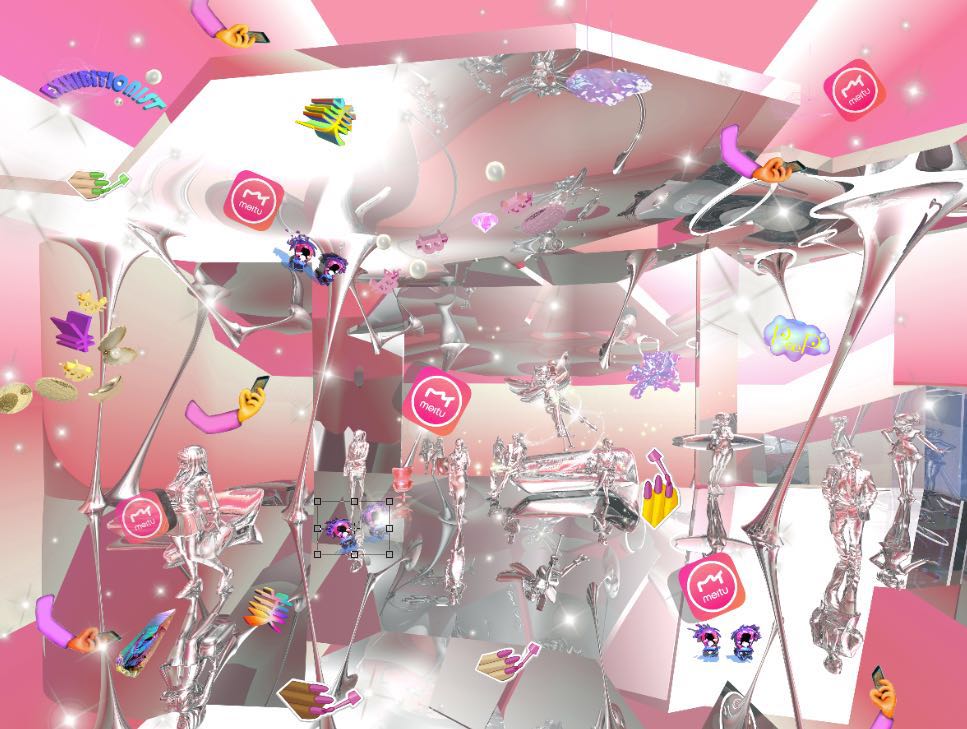
In 2026, we met the internet at a very Chinese time in its life – if one trusts viral trends. Following the second Trump administration's tariff wars and efforts to ban TikTok in the United States, “Chinamaxxing” became all the rage as people living in the west exalted, among others, the infrastructure of Chongqing, Labubus, congee, and RedNote (小红书). For a brief moment, the latter became a possible refuge for TikTok users, attracting swaths of curious newcomers from outside China. The memefication of Sinophone culture, especially on the heels of surges of racism in the immediate aftermath of the COVID-19 pandemic, is the other side of the orientalist coin.
We often think of the social media platforms we use in the West as global. Yet behind China’s Great Firewall, a vast and largely separate social media ecosystem has developed, with platforms that are used by hundreds of millions of people but remain relatively unfamiliar outside the country. These platforms have their own cultures and norms, shaped by China’s particular digital and political landscape. They are also spaces where new trends, memes, and visual languages emerge, many of which eventually make their way onto the global internet, sometimes months or years later.
The Chinamaxxing trend has little to do with China, and even less with its internet, but it does perhaps point to something that Western denizens miss. From afar, the Chinese internet looks like either a techno-utopia or a draconian authoritarian state. Up close, it is neither. Behind the Great Firewall, a parallel platform economy has grown its own monsters out of copies (Didi began as an Uber clone), every app chases Elon Musk’s dream of the “everything app”, and the spectre of censorship is an opaque, erratic force. Nor does the Chinese internet end at the Firewall. Its Sinophone extensions span Cantonese, Hokkien, and creolised languages, diasporas, and an estimated 30 million VPN users inside China, scattered across Instagram, Reddit, X, and Xiaohongshu, mostly invisible to Western feeds.
As internet of a sort, we at The Hmm want to dig deeper. On 25 November, The Hmm’s Chinese Internet Tour takes you on a guided digital trip through China’s social media ecosystem. Led by media anthropologist Dino Ge Zhang, we’ll explore the wider landscape of platforms, communities, aesthetics, and strange digital corners that make up China’s internet. We’ll do so alongside artists, researchers, and designers with local expertise who’ll show us how these platforms work, what makes them distinct, and how to navigate the practical barriers to using them.

Keep scrolling for the rest. Working on youth culture online? Share it in # on our Discord. See you soon!
多喝热水 (drink more hot water),
◌ ◌ ◌ The Hmm ◌ ◌ ◌
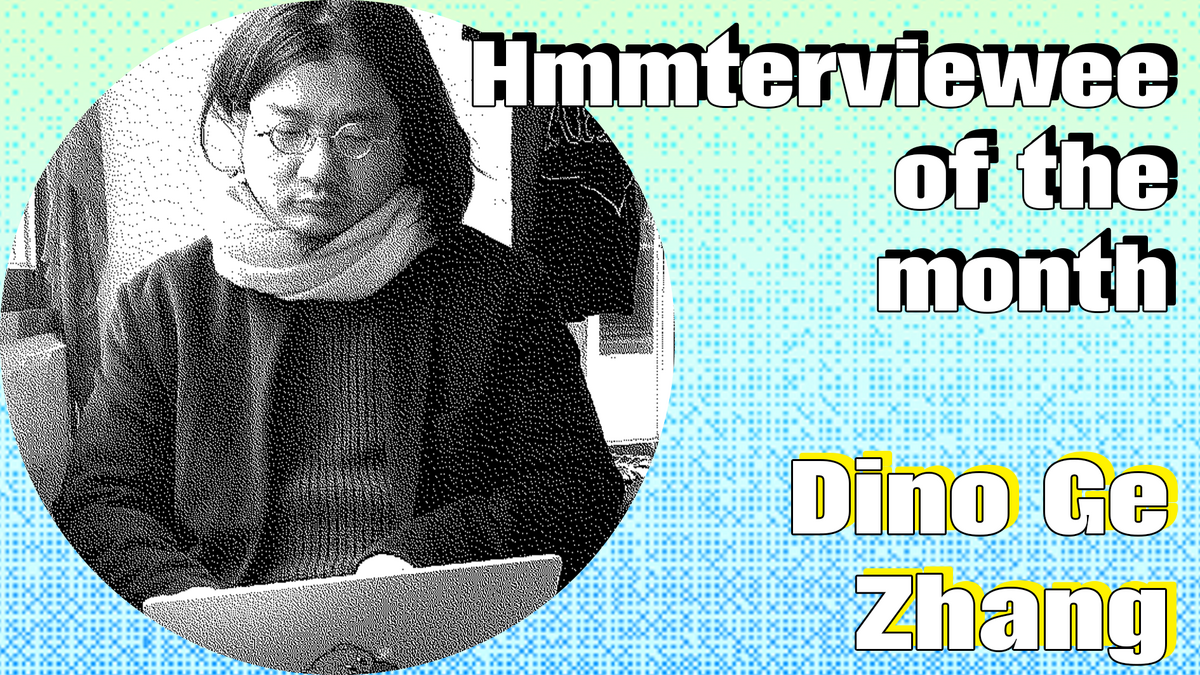
Hmmterviewee of the month: Dino Ge Zhang
This month’s Hmmterviewee is Dino Ge Zhang, a media anthropologist, non-fiction writer, and Associate Professor in Digital Culture at the University of Bergen. He is the founding editor of the Bureau of Low Theory, a web database of internet culture and underground theory from China. His research follows livestreaming across the Sinophone world, from China’s early streaming cultures to the vulgar aesthetics of Kuaishou (快手), and works towards an ethnographic theory of boredom. On Wednesday 25 November, he leads our guided tour of the Chinese internet on The Inbetween. Read below to find out more about Dino’s thoughts on the internet – edited and condensed for clarity.
How many browser tabs do you have open right now (and what for)?
I use three browsers, each for different purposes: Chrome, Firefox, and Brave. Currently, I have 120 tabs open in Brave, 57 in Chrome, and 2 in Firefox.
What's the weirdest thing an algorithm has recommended to you lately?
An Instagram account called Norwegian.npc, a series of short animations caricaturing life in Norway. Probably AI-generated, but it was very weird in its sense of humour. I moved to Norway about five months ago. It was not until last week that I started to be consistently fed Norwegian content by the reel algo slot machine; my different interests, weird internet memes/brainrot and bokmål norsk started to intersect in unforeseen ways.
For something Chinese internet, S.H.I.T. Journal. This is a site made by disgruntled graduate students in China to make fun of the already ridiculous level of academic ‘garbage’ they are forced to generate because they are often required to publish in order to graduate. So they made a journal that is called shit journal.
Which Sinophone internet trend do you expect to reach Anglophone internet next?
Recently, there have been more cases of Chinese people having extended debates on X with people who speak other languages. One case was that after an electoral dysphoria, while posting on X, the Brazilian Left started to call for Chinese intervention in Brazil to counter American influences. [...] The automatic translation button on X has afforded waves of cross-cultural political exchanges where Chinese people unfailingly exhibited their racism and unwavering obsession with economic growth/neoliberalism. In a way, this is a good development of direct political exchanges (afforded by increasingly accurate automatic translation), but this will inevitably dispel a lot of delusions and fantasies about Chinese people and vice versa.
I cannot say what the next trend will be, but it won’t be simply a case of something popular on the Chinese internet transferring to the rest of the world. [...] Chinamaxxing, for example, was not a trend that started in/by China; China itself is simply a symbol or a placeholder even for something that is sorely missed in the West, whatever that is, but certainly not the real Chinese internet.
Have you ever changed how you speak because of the internet? How?
This, of course, happens regularly, as I am old enough to experience multiple generations of people on the internet. [...] In some cases, I still keep the linguistic habits of a bygone internet, but in others, I am forced or propelled to adapt. English, as the default international internet language, has a profound impact globally on the level of everyday speech.
Check out Dino's website and read the unabridged version on our website:

🎂 Suggested for you: Our 10th birthday
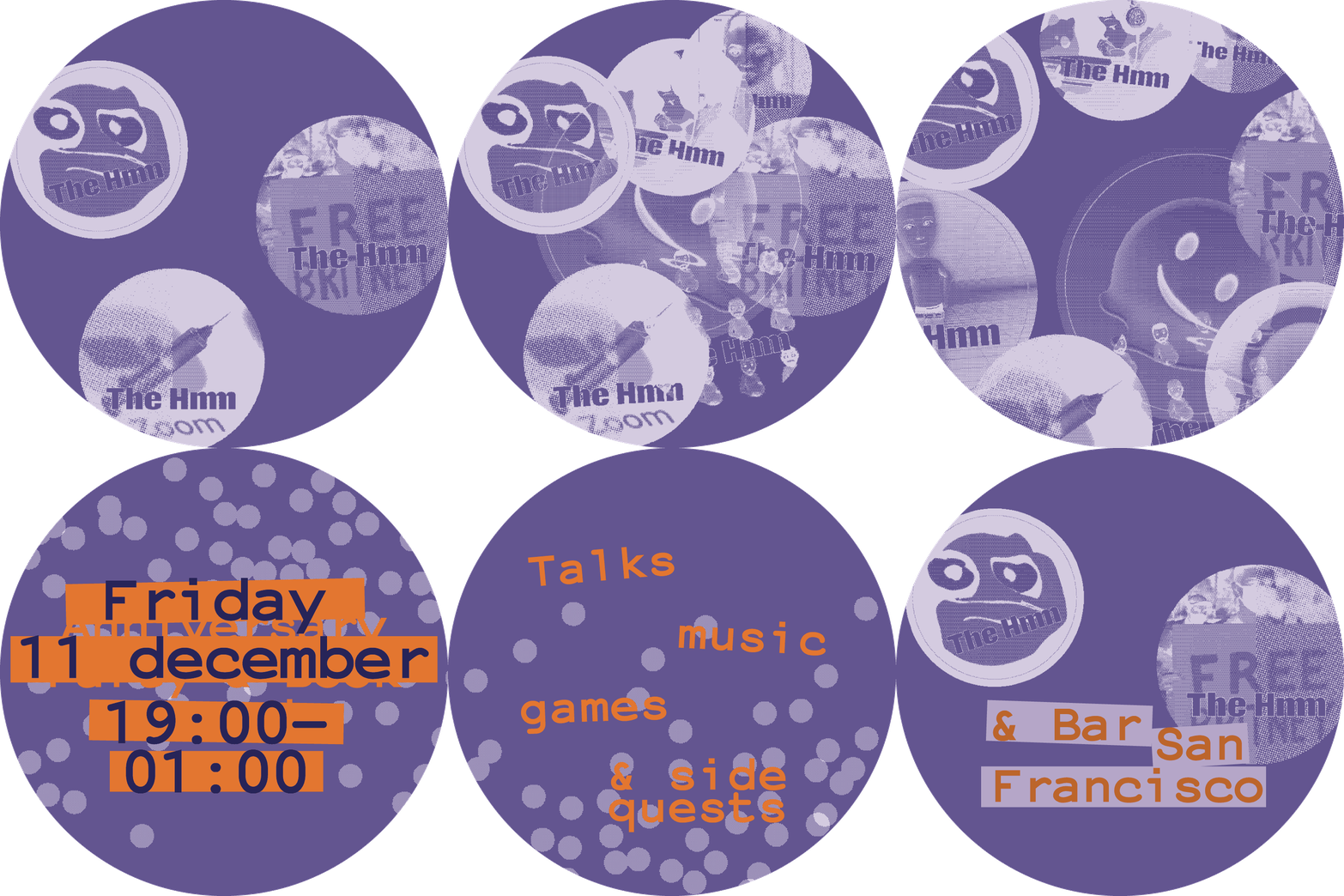
We've been at this (aka hosting, livestreaming, workshopping, and thinking out loud about internet culture) for a while now – 10 years, in fact, paralleling the history of the algorithmic feed. Ten years later, one of us is publishing a book about the other. Suggested For You: Reflecting on a Decade in the Feed brings together some of the leading thinkers on the subject to reflect alongside us. On Friday 11 December, we’re gathering at W139 to celebrate the launch. Expect our classic five-minute flash talks, The Hmm’s Hotline, where you help shape our programming, and a Make Your Own Slopject workshop. Then we head to Bar San Francisco, where live music and performances await us.
If you can't make it, you can still support us by pre-ordering the book via our webshop.
Stuff you should know
📅 Date: Friday 11 December 2026
🕗 Times: 19.00–1.00 CET
📍 Location: from 19:00–22:00 at W139, Warmoesstraat 139, 1012 JB Amsterdam & from 22:00–1:00 at Bar San Francisco, Zeedijk 40, 1012 AZ Amsterdam
🎟 Tickets: Free, but please register!

This programme is kindly supported by the Creatieve Industry, Amsterdams Fonds voor de Kunst and Het Cultuurfonds. The publication Suggested For You is supported by Mondriaanfonds.
🤔 Putting on our thinking caps: Thinking Face Emoji podcast
Thinking Face Emoji, the podcast that follows our yearly theme, returns for a second season, this time tackling the ever-relevant question: “What was I looking at again?” Bringing together collaborators and contributors from across our year of programming, host Mela Miekus is joined by Reginold Royston, Ahnjili ZhuParris, Ruba Al-Sweel and Robin James to talk vibes, slop and deepfakes, data and algorithms, and the new orality. A new episode drops every Thursday from 19 November, right up to our tenth birthday on 11 December!
 Image by Susann Mielke from Pixabay
Hmm-ing in the wild
Come find us at the following events!
◯ 25 November જ⁀➴ The Hmm TO the Chinese Internet @ The Inbetween
◯ 6 December જ⁀➴ Squish the System Workshop with Maria Mombers @ IMC Weekendschool West
◯ 11 December જ⁀➴ 10 year anniversary party & book launch @ W139
◯ 12 december જ⁀➴ Meshberrey workshop @ V2
Had a taste and want some more? The Hmm workshops are available to book here.
Activities in the digital field
◯ New publication જ⁀➴ Archaeology of a Promised Future by Sofi Xian (forthcoming on Aksioma)
◯ New publication જ⁀➴ Girl Reader (forthcoming on Set Margins, initiated by Mela Miekus, co-edited with Mita Medri)
◯ MU Hybrid Art House જ⁀➴ Grounding the Cloud: Makers Present (27 November)
◯ MU Hybrid Art House જ⁀➴ Exhibition: Small AI Alternatives to Large Language Models (until 3 January 2027)
◯ V2 જ⁀➴ The Holistic Technology Salon Exhibition (20–29 November)
◯ V2 જ⁀➴ Crash Course in Internet & Society: Technologies of Solidarity (11–13 December)
We hope you enjoyed this editorial newsletter! Welcome back, and see you soon!
< ="true" style="visibility: visible !important;">>Visit your personal preferences page if you'd like to change how you receive this newsletter. Or, if you must, opt-out completely from all future mailings :-(
