IF I CAN’T DANCE, I DON’T WANT TO BE PART OF YOUR REVOLUTION
October is going to be busy at If I Can't Dance, both on stage and behind the scenes. We are getting ready for the third iteration of Tidal Gatherings on 10 & 11 October and a research sharing by Clara Saito on 17 October (see details below).
In the meanwhile, we are also preparing for the second chapter of Anchan/Anna Daučíková & Christina Della Giustina's commission, opening on 31 October (more on that very soon!) as well as finalizing the last details of the new Open Rehearsal Open Call, and the shortlist selection for the dNM mural together with our partners.
Also, a special shout out to our Phantom Scores MA cohort at the Sandberg Instituut which at the end of September embarked on their two-year journey, accompanied by Programme Head Eva Posas and Coordinator Francisca Khamis Giacoman.
We hope to see you soon at If I Can't Dance!
Tidal Gatherings #3
Difficult Digestions
Lina Bravo Mora
10 & 11 October 2026
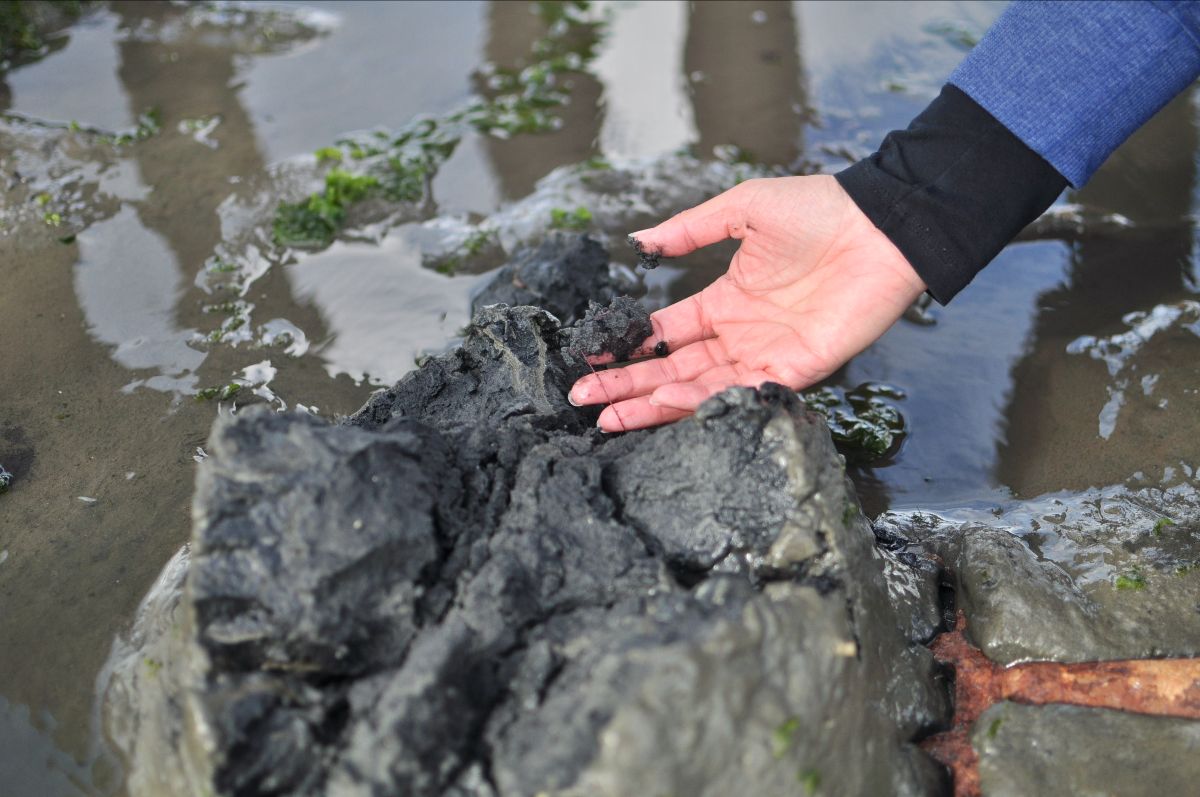
Approaching clay as a tidal and migratory material, the third edition of Tidal Gatherings presents a new performance and workshop developed by visual artist, clay and soil researcher Lina Bravo Mora. Both open up the decomposing worlds of mud, using migrating and stationary sediments from various water bodies in the Netherlands. Merging poetics and music, the performance “lands” us in these soils through geological storytelling and is accompanied by accordionist Luis Gabriel Kammerer Teran. The following day, the same muds are used for a writing workshop that invites participants to touch and consult with the different clays, bringing their muddy sensations into words.
Image: Photo and sculpture by Lina Bravo Mora, image by Varvara Tazelaar
[ID: Photograph of a hand gently touching sea mud.]
Clara Saito
History in Movement:
Tales of Resistance Against Dutch Colonization in 17th-Century Northeast Brazil
Research sharing
17 October 2026
15:00–17:00
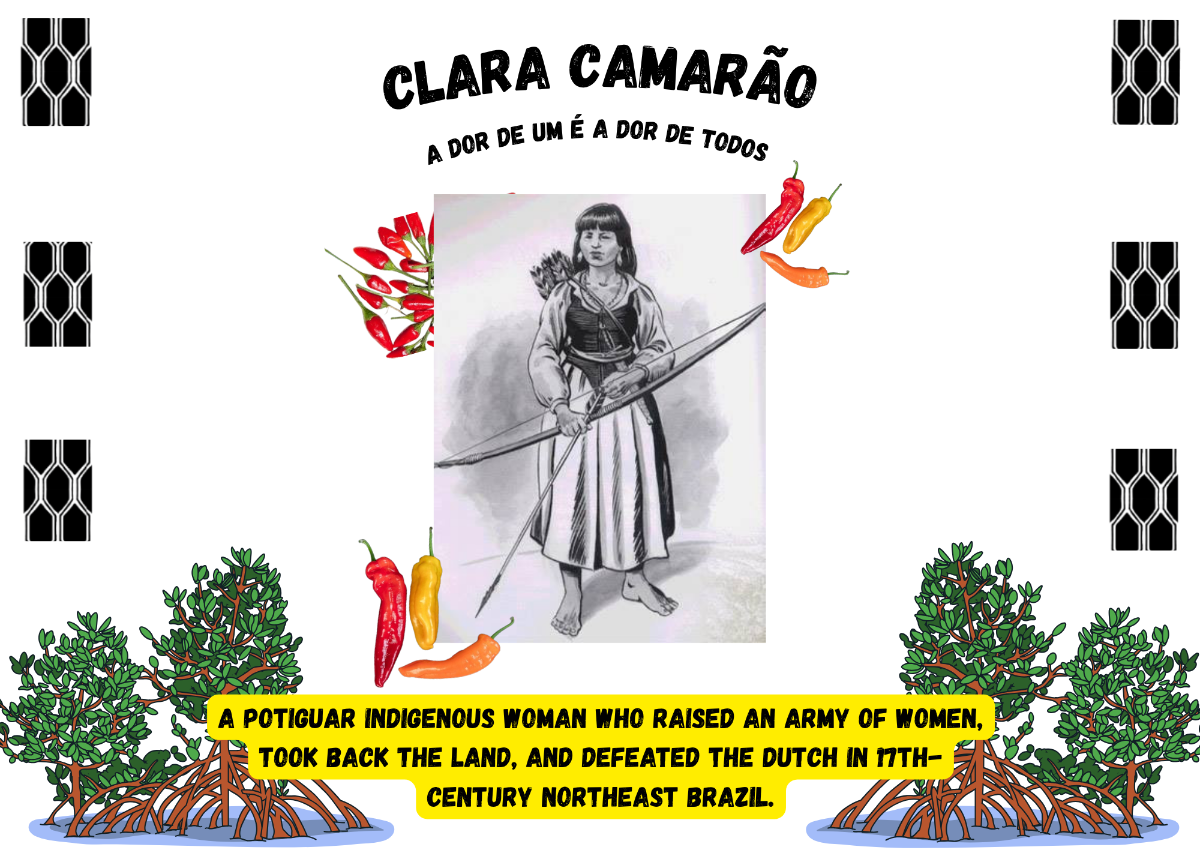
We are happy to welcome back artist Clara Saito, who will share parts of an ongoing research project connecting the colonial history of the Netherlands with the history of Northeast Brazil, where she was born. The presentation follows the traces of Clara Camarão, a Potiguar Indigenous woman who successfully led a women’s army against Dutch colonizers in 17th-century Northeast Brazil. Merging biographical notes with historical accounts, this informal opens up questions around armed resistance, betrayal, and social organization.
Baque Flamingo, an percussion group dedicated to Afro-Brazilian cultures of resistance, joins Clara Saito with a Maracatu de Baque Virado performance.
[ID: Poster featuring a central b/w portrait of Clara Camarão, depicted with bow and arrow. The title “CLARA CAMARÃO” appears prominently at the top in bold black lettering, with the phrase “A DOR DE UM É A DOR DE TODOS” underneath. Red, yellow, and orange peppers and leafy mangroves with long roots in water ponds frame the central illustration, alongside geometric patterns. At the bottom, a yellow text panel reads: “A POTIGUAR INDIGENOUS WOMAN WHO RAISED AN ARMY OF WOMEN, TOOK BACK THE LAND, AND DEFEATED THE DUTCH IN 17TH-CENTURY NORTHEAST BRAZIL.]