How has the visual grammar of militancy shifted across the global uprisings of the past decade?
OPENING FRIDAY 30 OCTOBER AT 18:00
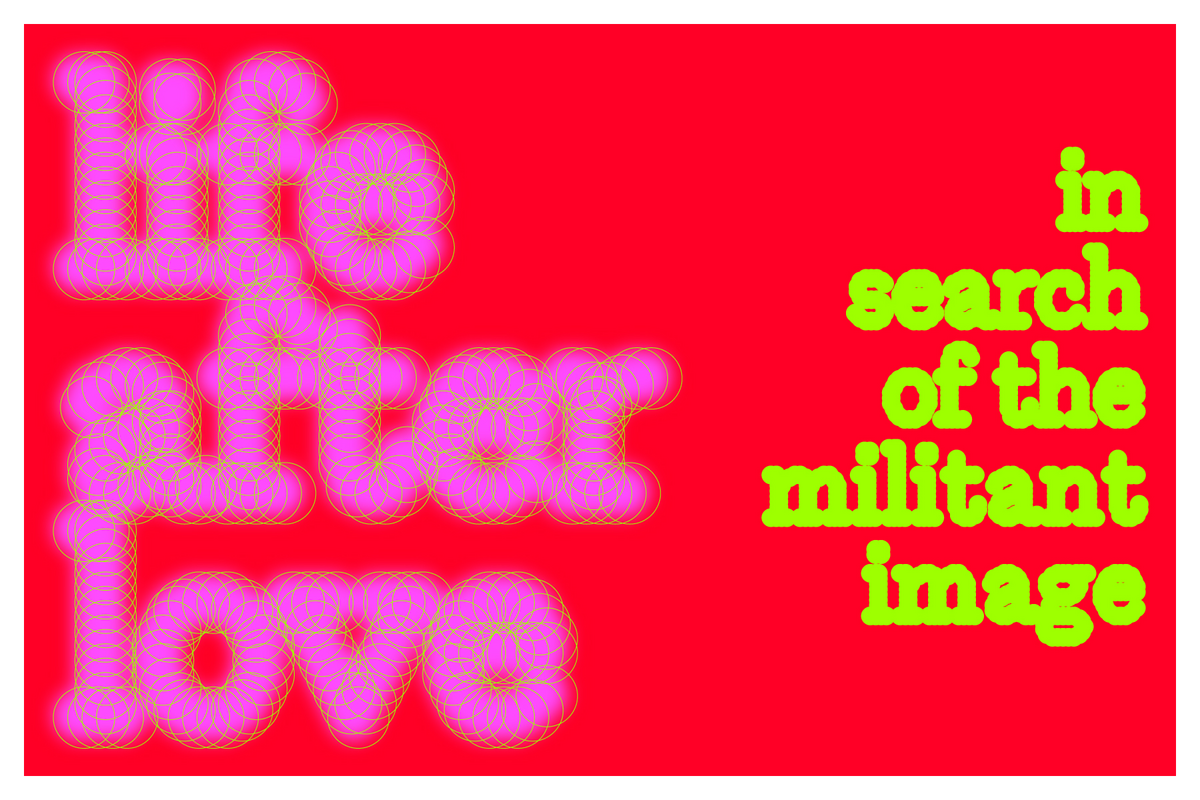
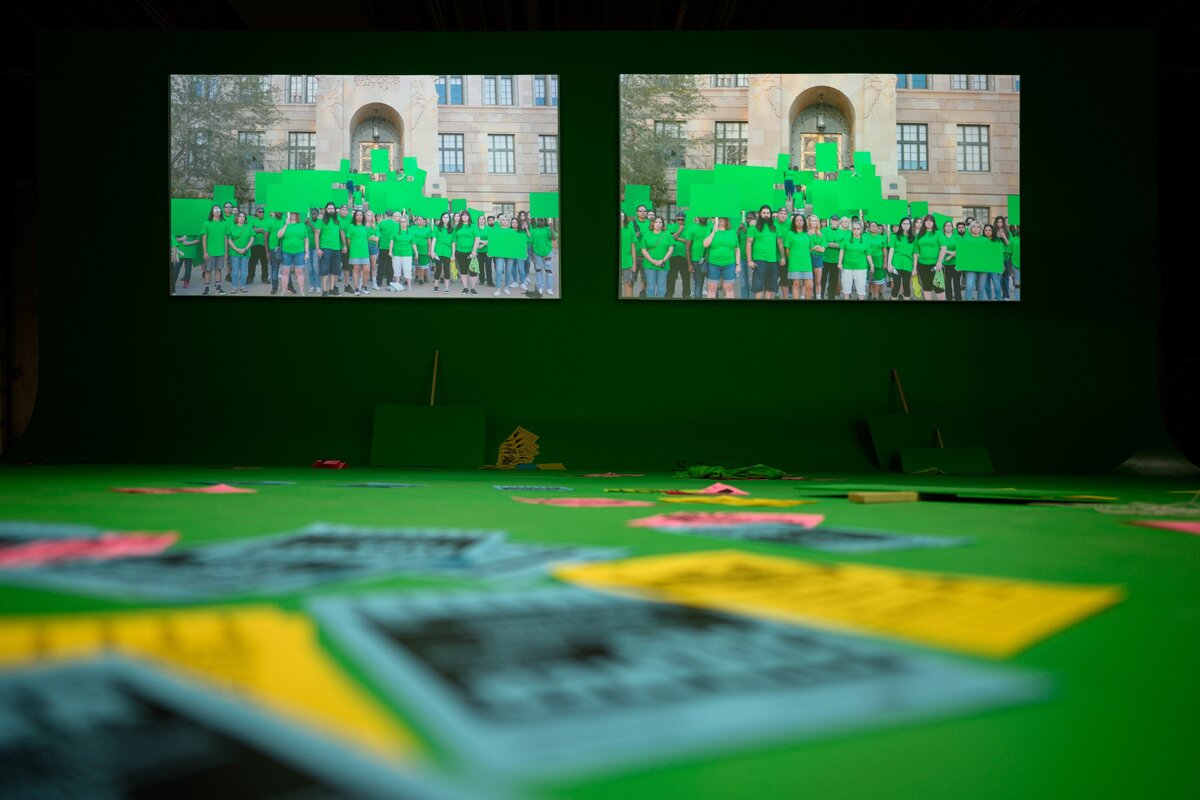
On show at Framer Framed from 30 October 2026 to 17 January 2027, the exhibition Life After Love: In Search of the Militant Image surveys how the visual grammar of militancy has shifted across the global uprisings of the past decade.
Curated by Hera Chan and Edwin Nasr, the exhibition traces resonances between struggles that have unfolded from Hong Kong to Beirut, and from Yangon to Jenin, bringing together artists, cultural workers and community organisers.
Featuring work by Basel Abbas & Ruanne Abou-Rahme, Haig Aivazian, Isshaq Albarbary, Hannah Black, Nolan Oswald Dennis, Chaw Ei Thein, Giraffe Leung, Yoshua Okón & Juan Obando, Bahar Noorizadeh and Sawangwongse Yawnghwe.
You are warmly invited to the opening on Friday 30 October at 18:00. We look forward to seeing you there!
Life After Love asks what the changing forms of political struggle reveal about the changing forms of image-making. If the militant image of the twentieth century emerged alongside mass party politics, anti-colonial liberation movements and the project of revolutionary cinema, what becomes of that tradition within a conjuncture shaped by digital platforms, algorithmic circulation and decentralised forms of political organising?
The exhibition approaches the militant image as a historical category, which has always depended upon particular forms of mediation. Earlier traditions of militant image-making were sustained by formations capable of producing and circulating images in the name of a collective political subject. Their ambitions were inseparable from the through which they moved and the revolutionary horizons they sought to cultivate.
Contemporary uprisings unfold under markedly different terms. Images now circulate across encrypted messaging applications, social media feeds and informal digital networks whose logics reshape our visibility and attention. Often produced by those embedded within the events themselves, they move rapidly between testimony, tactical communication and affective expression. Their aesthetic form bears the imprint of the political moment from which they emerge: anonymity, spontaneity and opacity become qualities inscribed within the images.
Rather than asking whether the militant image survives in the present, Life After Love asks how its political function has been transformed, and what this transformation discloses about the actuality of struggle. The works assembled here reflect upon the conditions through which images are produced, circulated, appropriated and contested. Many emerge from practices situated alongside political organising, mutual aid and community work, where cultural production unfolds in close proximity to lived struggle and the imperative of solidarity. Taken together, they invite viewers to consider the militant image in the present tense and the forms through which emancipatory futures become thinkable.
Opening hours Tuesday to Sunday: 12.00 – 18.00 Free entry
Framer Framed is within walking distance of Muiderpoort station and the Oostpoort tram stop.
ACCESSIBILITY
All Framer Framed programmes are free to attend. Donations are always welcome. Our venue is . Please read our accessibility page to find out more about what to expect.