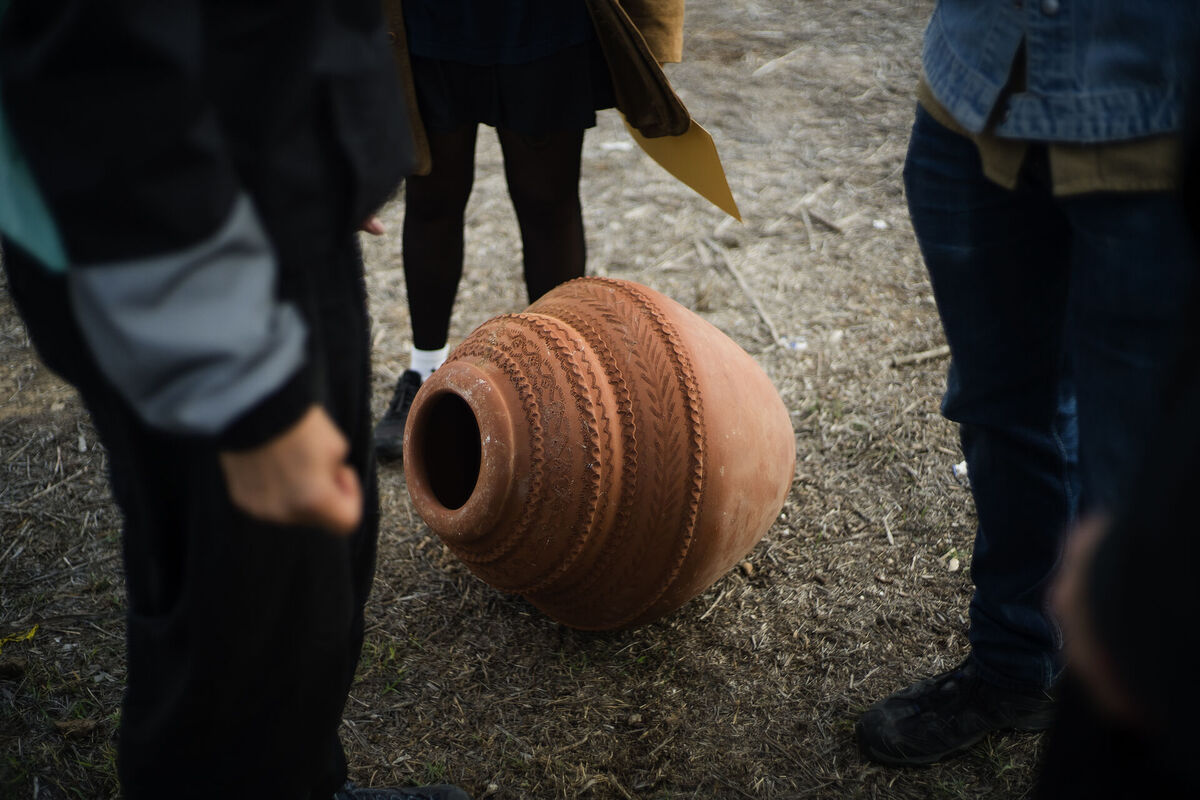
This week is your last chance to visit CaccHho CucchhA by Mercedes Azpilicueta, and to participate in the final two Playshops, facilitated by Antonella Fittipaldi, Gļeb(s) Maiboroda and Mercedes Azpilicueta herself! At the end of November, we welcome Errant Journal for a public research session that looks into transregional possibilities for anti-imperial companionships, with contributions by Adriana Arroyo, Keto Gorgadze, Lesia Kulchinska, Lee Kai Chung, Samira Makki, Ana Mikadze, Petrică Mogoș, Victoria Soyan Peemot and Czyka Tumaliuan. On 12 December, we will launch the book : de Appel 1975-2025, co-edited by Martha Jager and Hannah Cheney, which holds fifty years of correspondence from the Archive of de Appel and draws up a relational and affective history of the institution. In the new year, the collaborative project and exhibition The Broken Pitcher by Natascha Sadr Haghighian, Marina & Peter Eramian opens at de Appel. The project traces the effects of and austerity, and looks at the banking system and the potentials for changing the script of interacting with it.
📌 Visit the exhibition between 12:00–18:00, until Sunday 23.11.2025
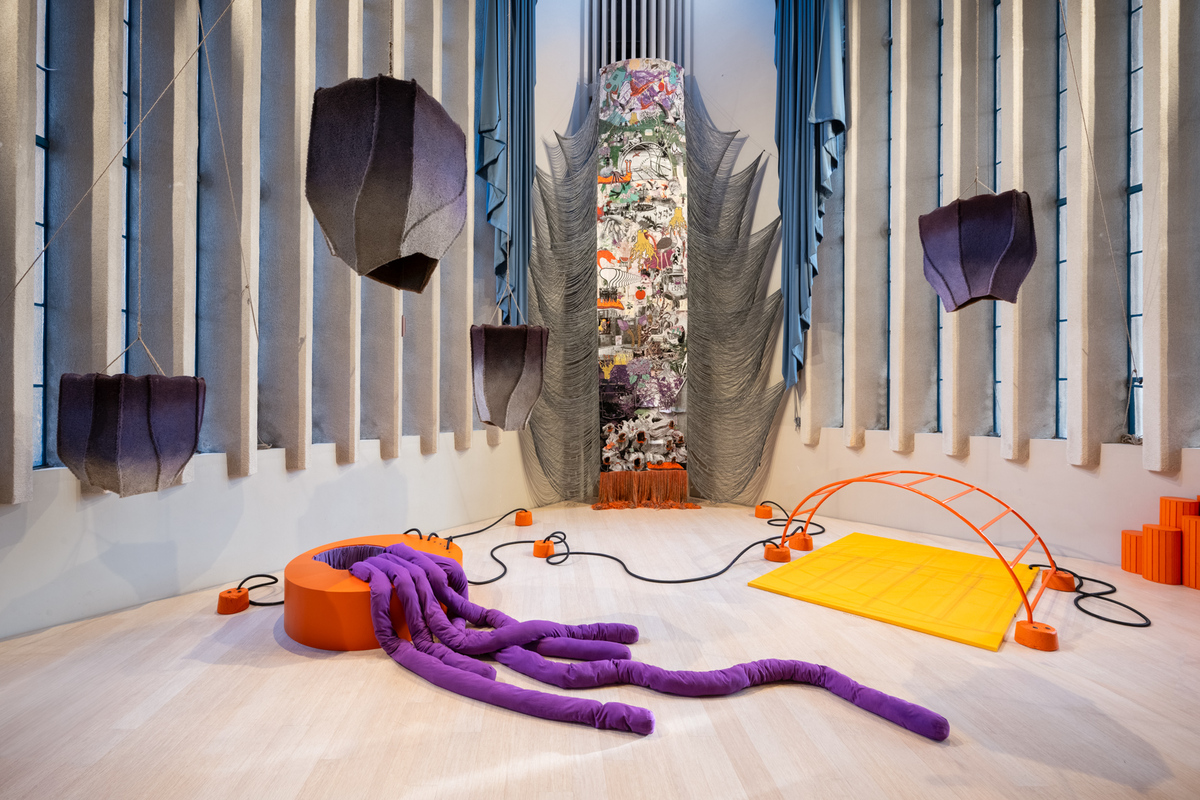
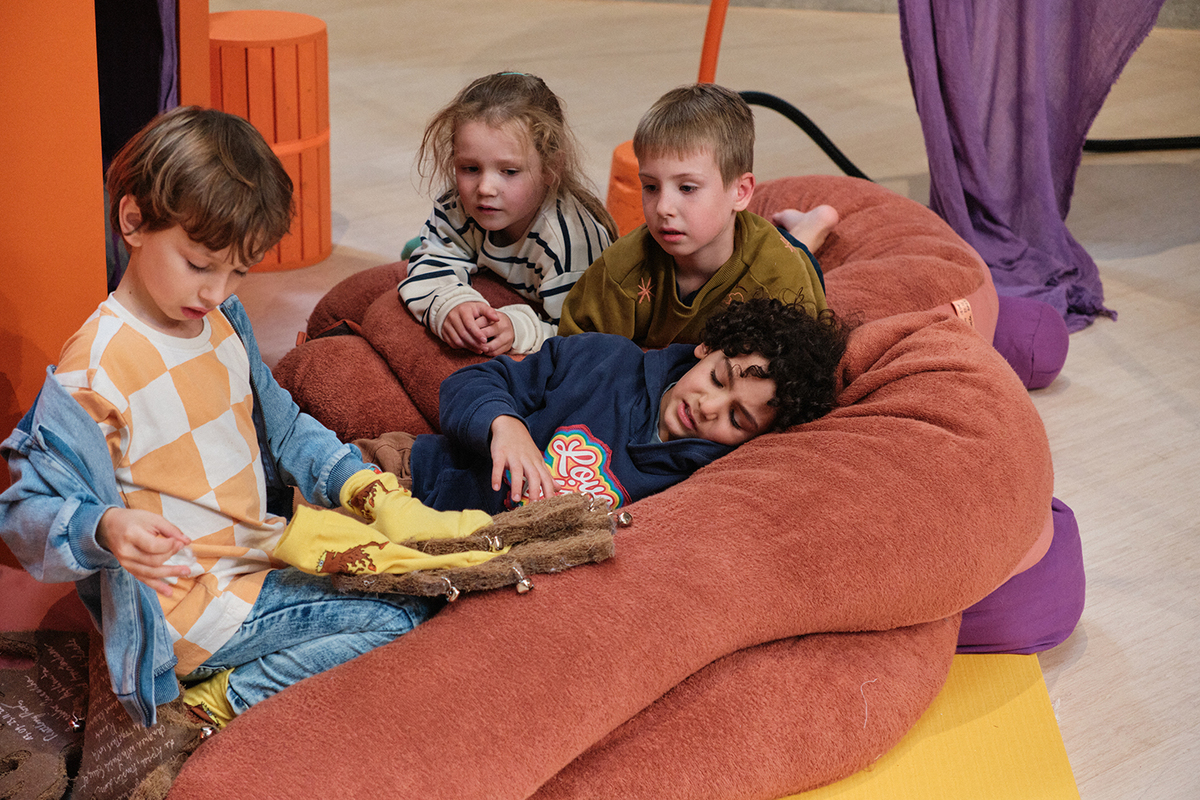
CaccHho CucchhA draws on Azpilicueta’s long-term research, while shifting away from adult-centric frames. The exhibition invites visitors to inhabit a porous dramaturgy where children and adults collectively compose stories, gestures, and sounds. The exhibition is structured around two guiding notions: cacho, a fragment of time that is immeasurable or leftover to be repurposed into something new, and cucha, a shelter or safe place. Here, every visitor’s contribution forms a cacho of a larger narrative, while the exhibition space of de Appel becomes a cucha: a hospitable environment for collective play, care, and slow time. ‣ More info
The exhibition CaccHho CucchhA by Mercedes Azpilicueta is activated through children’s free play and a series of artist-led playshops. Since this is a child centered exhibition, rather than being guided or instructed, children will be accompanied, with activities adapted to their collective rhythms, needs, and desires. The playshops are open to children aged 4–12. Adults are expected to participate in the play activities. This Saturday, in the closing weekend of the exhibition, is your final chance to participate in one of the two Playshops:
○ Playshop Weaving and storytelling, led by Mercedes Azpilicueta & Gļeb(s) Maiboroda
Time: 11:00–12:30, language: English (Dutch translator will be present)
○ Playshop Movement with children and parents, led by Antonella Fittipaldi
Time: 12:30–14:00, language: English (Dutch translator will be present) ‣ Register here
📌 Friday 28 & Saturday 29.11.2025 at de Appel & OBA CC Amstel
Participants: Adriana Arroyo, Keto Gorgadze, Lesia Kulchinska, Lee Kai Chung, Samira Makki, Ana Mikadze, Petrică Mogoș, Victoria Soyan Peemot, Czyka Tumaliuan.
Errant Journal invites you to a public research session in preparation for its ninth issue to be launched in April of 2026. This issue is guest-edited by Katia Krupennikova and looks into transregional possibilities for anti-imperial companionships. The public event with presentations by some of the contributors to this issue is aimed at building networks, to share stories of pain, joy, and deviance, and investigate how these connections can strengthen anti-colonial resistance. The editorial/imaginative centre are the regions that have experienced Russian Imperial aggression from where it makes connections across times, geographies, and ontologies to explore the radical potential of companionship. ‣ Full programme & tickets
📌 Friday 12.12.2025, 18:00–20:30 at De Lutmaak (Lutmastraat 199H)
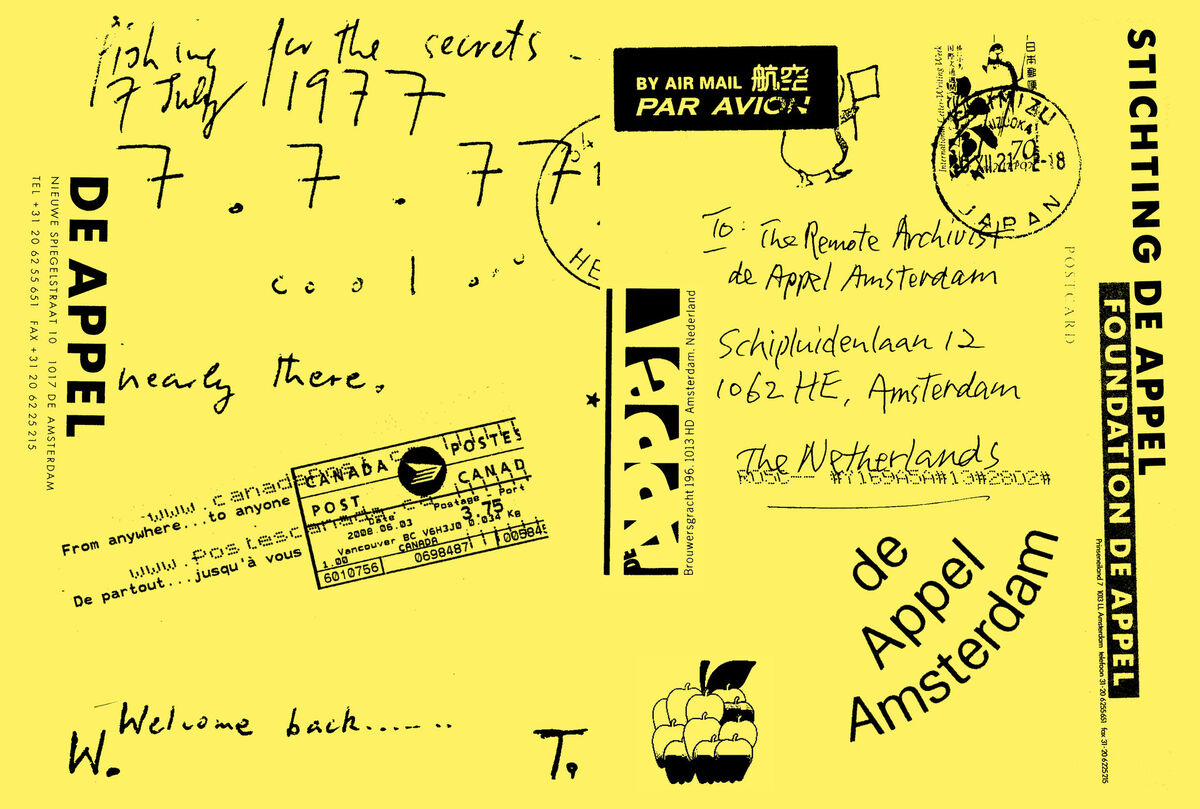
You are warmly invited to the book launch of : de Appel 1975-2025. The publication is initiated by Martha Jager, co-edited with Hannah Cheney and designed by Bardhi Haliti and Zuzana Kostelanská. It brings together fifty years of correspondence from the Archive of de Appel and draws up a relational and affective history of the institution. The book traces the activities of de Appel through letters, telegrams, airmail, postcards, faxes, and emails, sent to and by de Appel. Rather than providing an overview of de Appel’s public activities throughout the decades, this publication illustrates the relational history of de Appel, focussing on its networks, conversations, and collaborations. The book features materials by more than a hundred different authors and includes paper-based and digital correspondence by, amongst many others, Laurie Anderson, James Lee Byars, Theresa Hak Kyung Cha, General Idea, Mona Hatoum, Patricia Kaersenhout and Carolee Schneemann. Context is provided by written guest contributions by Alice Butler, Alison Burstein, Annet Dekker, Susan Gibb and Brian Fuata and de Appel's archivist Nell Donkers. An edition by Alison Knowles in the shape of a ribbon forms a special prompt to the reader of the book. ‣ More info
The iteration at de Appel features new contributions from Stelios Kallinikou, Olga Micińska, and Maria Toumazou.
Tracing the effects of and austerity, the collaborative project The Broken Pitcher by Natascha Sadr Haghighian, Marina and Peter Eramian attends to a concrete case: a crucial meeting at a bank, negotiating the foreclosure of a family home in Larnaca, Cyprus in 2019. The Broken Pitcher looks at the banking system and the potentials for changing the script of interacting with it. The project consists of a one-to-one scale model of the bank room, that functions both as an exhibition space as well as a set which features in a 70min film that reconstructs the scene.
Personal testimonies, bonding over shared experiences and ideas for planning and organising in response to the micro- and macro- effects of debt, are shared and help to connect and learn from each other. In the iteration at de Appel, The Broken Pitcher foregrounds historical patterns of rupture through interlocutors who approach practice both as a social score and as a source of radical, intimacy. This chapter features artistic contributions by Stelios Kallinikou, Olga Micińska and Maria Toumazou, whose works trace the dead-ends of state bureaucracy and the collapse of banking as a social structure. ‣ More info