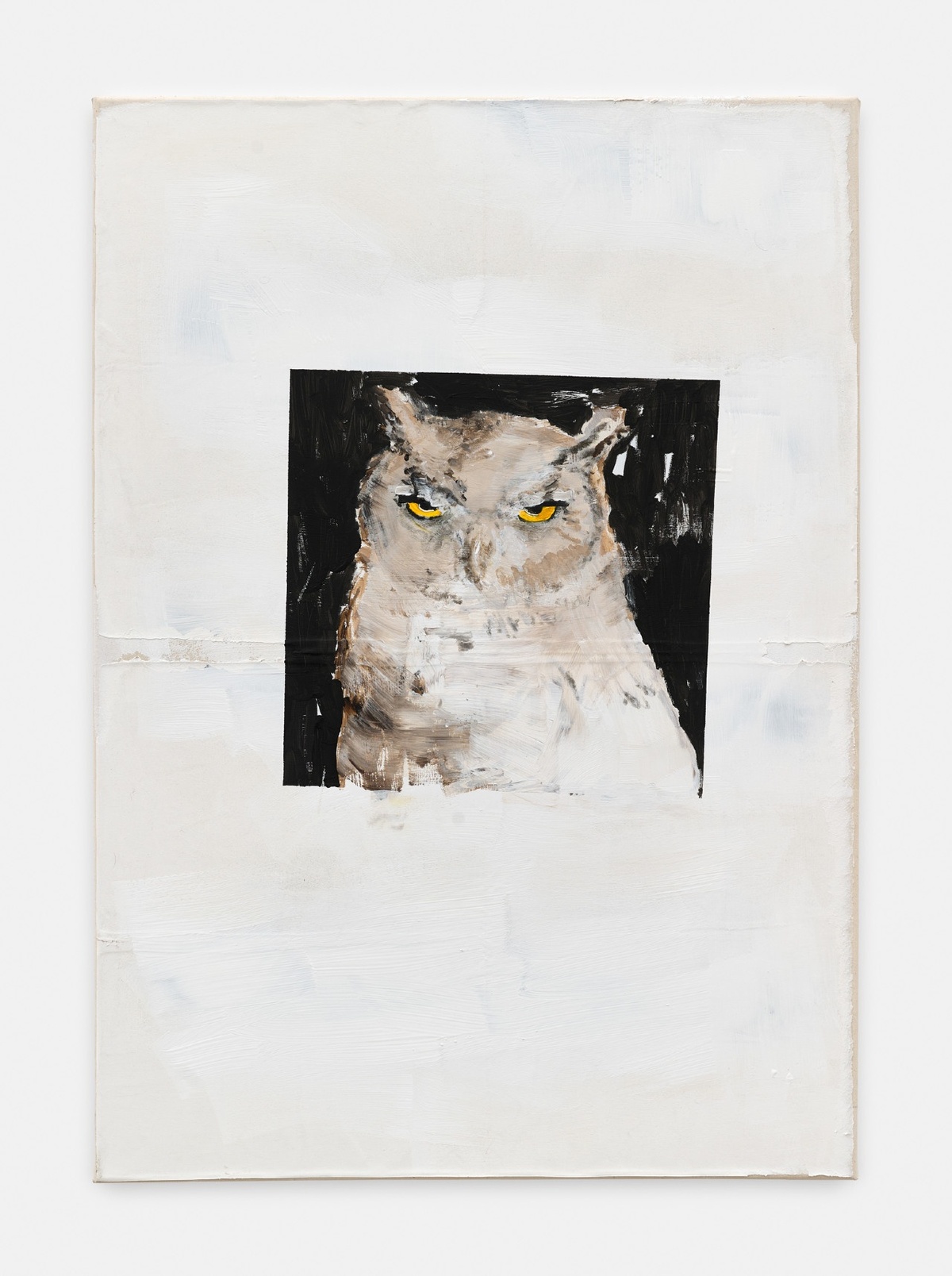
With works by Flora Fritz, Tenki Hiramatsu, Soshiro Matsubara, Birgit Megerle, Alan Michael, Lin Olschowka, David Ostrowski, Torsten Slama
Opening Saturday September 5 from 5 - 8pm
David Ostrowski, Bitte nicht nach Hause schicken (Parliament Paintings), 2026,
Acrylic and paper on canvas, 100 x 70 cm (39 3/8 x 27 1/2 in)
Dear friends,
I hope you can join us tonight for the opening of the season with a fantastic group show and a newly renovated gallery, very excited for this one!. The opening goes from 5-8pm and the exhibition will remain on view until October 31st.
Do not hesitate to reach out if you want to know more about the works in the show.
A painted animal cannot pose. It does not pose for the picture, does not know it is being looked at, does not agree to any of it. Everything portraiture depends on is missing, and painters have gone on painting animals anyway, for as long as there has been painting.
Velázquez painted almost no animals on their own. Dogs are everywhere in his work and horses carry half the court, but always attached to someone. The exception, one of my favourite paintings of his, is a deer’s head, small, dark ground, bust length, lit from the left, hung at the height of a person's face. It is the format he used for dukes and infantas, applied without a single adjustment. The head is turned the way a sitter turns. The fur is done at the speed of a lace collar. Only the look is missing. The picture puts you in front of a face at your own height, in the posture of being met, and nothing comes back. Not refusal, which would still be a form of address. Absence where the exchange should be.
What gets painted instead is a relation. In history, the animal in a picture is almost always doing work: standing in for property, for appetite, for innocence, for whatever the painter could not say plainly. It carries a meaning it did not choose and cannot refuse. This is why the animal has been so useful to anyone describing a person who has been reduced, sorted, kept, or made strange to themselves. Gregor wakes as an insect and the household's arrangements barely change.
The paintings gathered here work in the gap between the creature and the use made of it. What holds the exhibition together is not a species or a style but an unease. Looking at an animal is a rehearsal for looking at each other, and neither exchange is equal.